Warehouse photos before the parcel leaves, and how to read them
The photo set is your one look at the goods while a seller return is still easy, and your last look before choosing a lane.
What a QC photo set is
QC, short for quality check, is the agent's look at an item when it reaches the warehouse. Staff open the package, compare the item with the order, and take photos you can review before anything is shipped. Most agents include a few photos per item and sell extra photos or close-ups as an add-on.
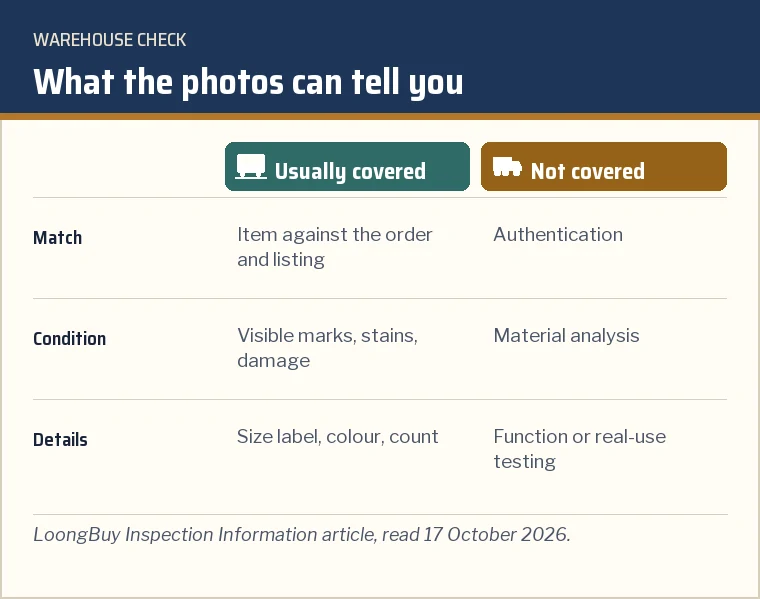
Read the scope closely. LoongBuy's inspection article describes its standard check as a record of the visible condition on arrival: it compares the item with the order and the seller's listing where that is usable, and it does not replace authentication, material analysis, function testing or real use. In other words, the photos tell you what arrived and how it looked, not whether it will last.
That still matters. A wrong size, a wrong colour, a stain or a broken zip caught at the warehouse can usually go back to the seller. Caught after delivery, it usually cannot.
How to check QC photos, line by line
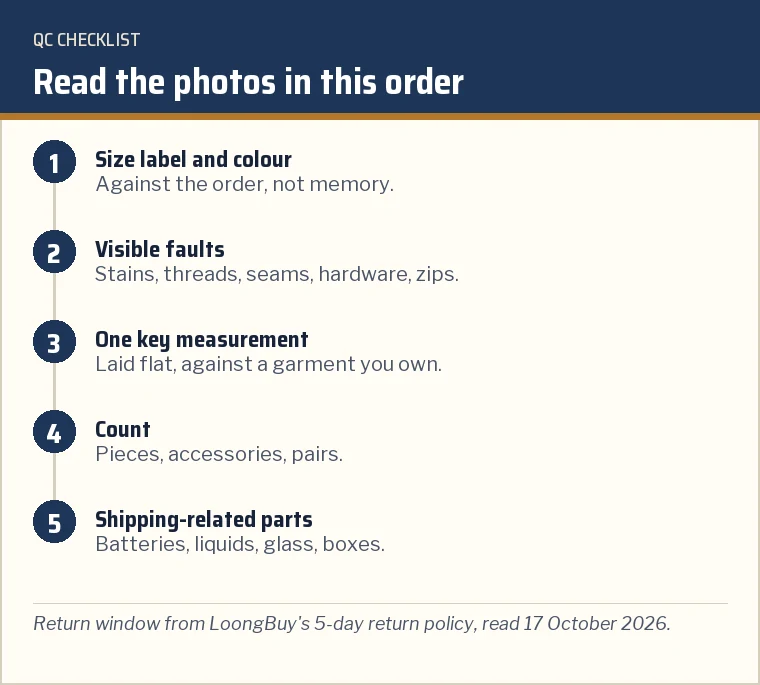
Read the photos in a fixed order so nothing slips. Start with the size label and the colour, the two most common mistakes, and compare them with what you ordered, not with what you remember. Then look for visible faults: stains, loose threads, uneven seams, scratched hardware, a zip that sits crooked.
Next, measurements. If the seller lists a size chart, ask for a laid-flat measurement of the one figure that matters most to you, usually chest width or length, and hold it against something from your own wardrobe. Then count: pieces, accessories, pairs. Finally, look at anything that affects shipping: a battery, a liquid, a glass part, or a box you might want kept or removed.
Spot a problem? Raise it while the return window is still open. LoongBuy's 5-day no-reason return rule runs from arrival at its warehouse and excludes underwear, socks, food and items whose tags were removed on your instruction.
Three outcomes after looking at the photos
If the photos clearly match the requested item and answer your important questions, keep them with the order and proceed to packing choices. If a necessary detail is missing, ask for a specific view or measurement before deciding. If there is a visible mismatch, identify the item reference and show the expected option beside the received detail, then ask which remedy is available.
For a shirt, compare the size label, chest width or length measured in the same way as the seller’s chart, colour, quantity and visible damage. For shoes, check both labels and the pair. For a set, count the included pieces. A request for better quality is difficult to act on; a request to photograph the missing accessory or read the label is concrete.
QC means quality-control photographs in this buying workflow. GL and RL are informal buyer shorthand for approval or concern, not an official return authorisation. Normal photos do not certify authenticity or prove every function. Check seller and agent deadlines before dispatch, and keep storage time separate from return time. Packing or route optimisation should come after this product decision.
Photos and the lane you are about to pick
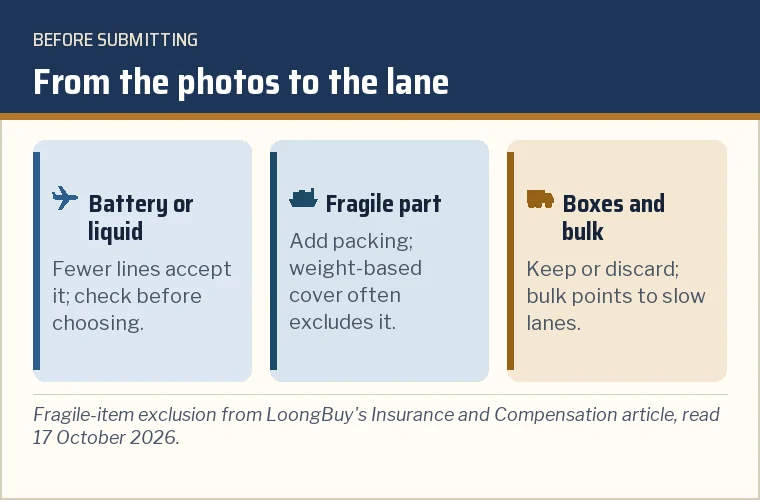
The warehouse photos are also your last look at the parcel before choosing a mode, so use them for freight as well as for faults. Spot anything with a battery or a liquid before you submit: it will shorten the list of lines and may rule out the lane you wanted. Spot anything fragile: on a weight-based compensation scheme, a broken glass or ceramic item is often not covered unless extra packing was bought, and LoongBuy excludes fragile items without added packaging from its damage cover.
Look at the boxes too. Shoe boxes and rigid packaging decide whether a parcel is light or bulky, and bulky parcels are where slow lanes and custom routes start to make sense. Decide what to keep and what to discard while you are looking at the photos, then submit.