
The catalogue: shelves of finds, grouped by how they usually travel
Sixteen categories and a few narrower searches, sorted into four groups so you can see early which items limit your freight choices.
Browse all 16 Spreadsheet categories
Open a category to compare listings, then save the original seller link and exact variant. Womenswear opens a keyword search; photos illustrate the type of item, not current stock or shipping acceptance.
 OuterwearShell jackets and coats: light for their size, which is why bulky outerwear is where the slow lanes start to make sense.Category
 SweatpantsPlain jogging trousers: soft and usually compact. Check the actual line’s restrictions and the full parcel contents.Category
 T-shirtsThe lightest shelf here. A few tees rarely change which lane a parcel can take.Category
 WomenswearA search, not a category; the first results lean towards jackets, so add a second word.Search results
 JewellerySmall and dense. On its own a ring makes a tiny parcel, so most buyers add it to a clothing haul.Category
 SneakersCompare the size chart and sole measurements.Category
 HoodiesCompare chest width, length and hood details.Category
 JeansCompare waist, rise and inside leg.Category
 Sports jerseysConfirm team, season, size and any personalisation.Category
 BagsCheck dimensions, straps and included pieces.Category
 HatsCompare head circumference and adjustment.Category
 BeltsCheck usable length and buckle dimensions.Category
 EyewearConfirm frame width, lenses and included case.Category
 PerfumeConfirm liquid acceptance before paying.Category
 WatchesCheck case size, movement and battery restrictions.Category
 ElectronicsConfirm model, voltage, battery and route acceptance.Category
How the shelves are grouped
The catalogue behind these links holds items buyers have found on Chinese marketplaces. Each link opens a live category or a search; nothing on this site is sold here, and prices on the cards are the sellers' prices in yuan, converted for display.
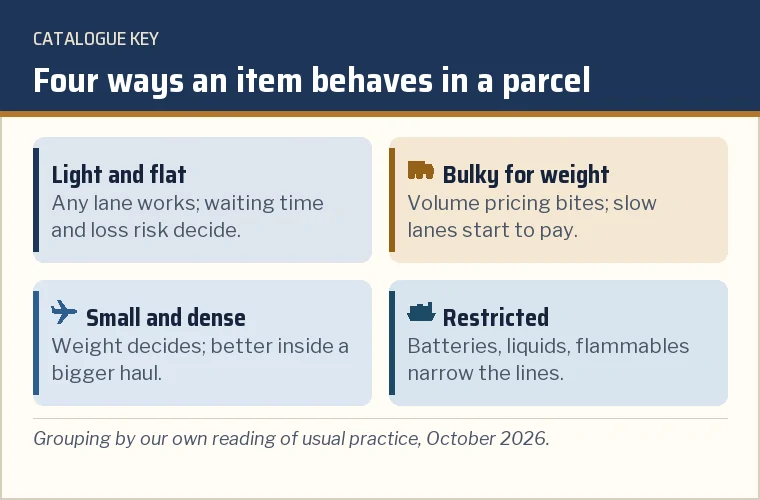
Instead of an alphabetical list, the shelves are grouped by how their items usually behave in a parcel: light and flat, bulky for their weight, small and dense, or restricted on many lanes. The grouping is our own reading of usual practice, so treat it as a starting point and let the line notes at checkout have the last word.
Womenswear uses a keyword search. The detailed shipping groups below also include narrower searches such as striped tees and silver chains; those supplement the sixteen main category cards.
A Spreadsheet turns browsing into a shortlist, not a paid order
Begin with a category or a descriptive search, then open the original seller listing. Choose the actual variant before comparing price: size, colour, material, quantity and included pieces can change the offer. Save the product URL and the measurement chart or specification that matters to you. Two shops using the same photograph do not necessarily supply the same item.
Next decide how to buy it. The seller supplies the goods. A shopping agent can place the purchase, receive it in China and arrange onward delivery; a forwarding service handles a purchase you have already made yourself under its own terms. The Spreadsheet does neither transaction. It connects product discovery with the questions needed to choose a service.
The shelf’s freight note is an early prompt. A folded shirt, a large retail box and a fragile accessory create different packing problems, but a category alone cannot select the line or quote the parcel. Confirm the actual product’s acceptance before buying something unusual and return to the shipping comparison when you have useful weight and dimension information.
Light, flat and forgiving
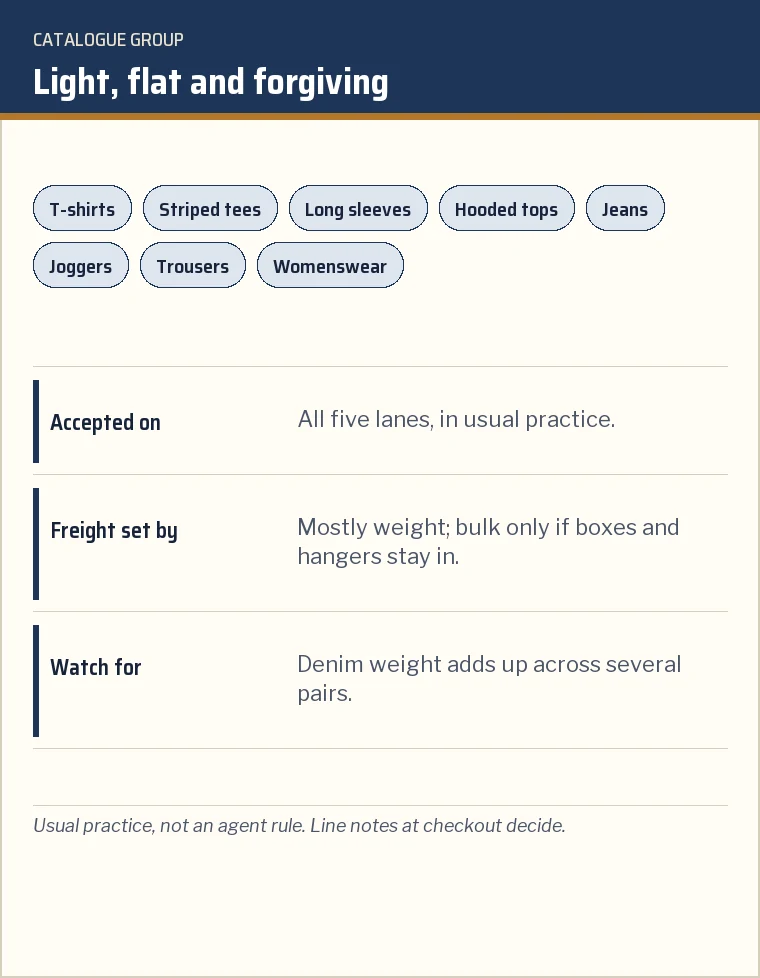
These shelves rarely decide the lane for you. A parcel of tees, knitwear and denim weighs little, packs flat once boxes and hangers are gone, and is accepted on every one of the five modes. The freight question here is mostly about how long you can wait and how much a lost parcel would hurt.
- T-shirtsThe lightest shelf; plain and printed cotton tops.
- Striped teesA search across many sellers.
- Long sleevesLong-sleeve tops and base layers.
- Hooded topsFleece and loopback cotton; bulkier than tees but still soft.
- JeansDenim is denser than it looks; a few pairs add real weight.
- JoggersTrack bottoms and jogging trousers.
- TrousersChinos, cargo pants and wide-leg cuts.
- Womenswear (search results)A search, not a category; results lean towards jackets, so narrow it down.
Bulky for their weight
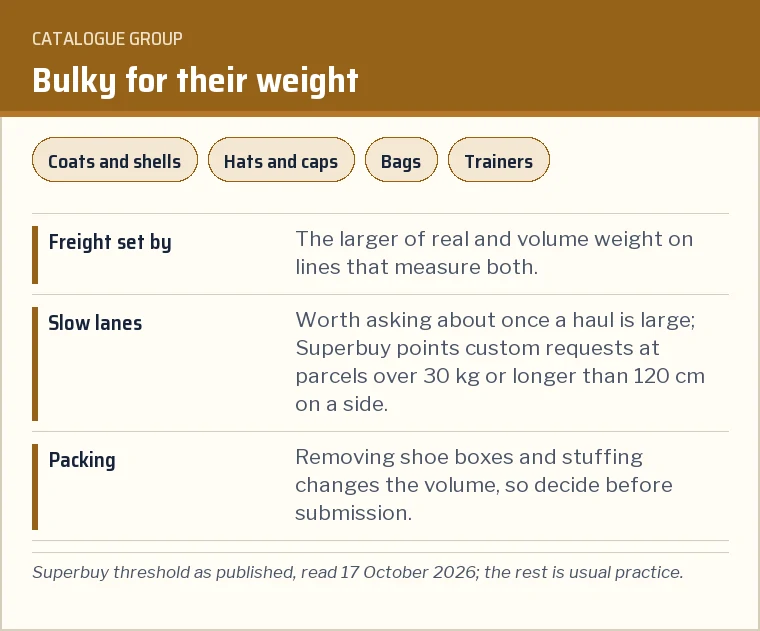
Coats, caps and bags take space without adding much weight, and lines that charge on volume treat them as heavier than the scale says. This is where a slower lane or a custom request starts to make sense, especially once a haul passes the size where couriers add surcharges.
- Coats and shellsDown jackets, shells, overshirts; the classic bulky shelf.
- Hats and capsLight, but a rigid cap does not compress.
- BagsStructured bags keep their shape in the box; soft bags fold.
- TrainersShoe boxes, more than shoes, are what make a parcel bulky; decide on keeping or discarding them before submitting.
Small and dense
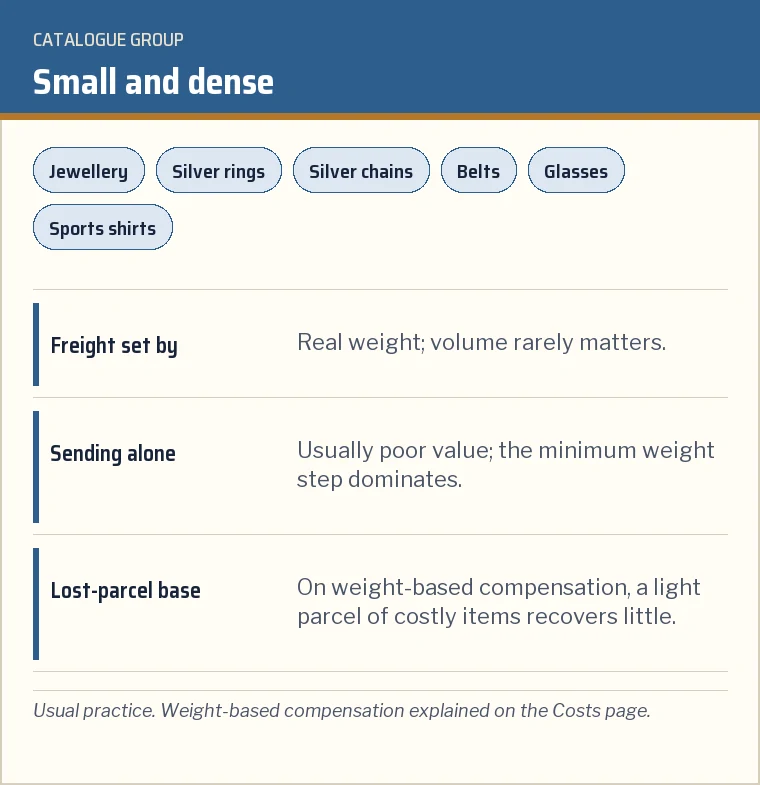
Jewellery, belts, glasses and watches make small, heavy-for-size parcels. Volume never decides their freight, weight does, and a single item can cost more to send than to buy. Most buyers fold these into a clothing haul rather than shipping them alone.
- JewelleryRings, chains, earrings.
- Silver ringsA search for rings.
- Silver chainsA search for chains and bracelets.
- BeltsBuckles add weight; leather adds little.
- Glasses and sunglassesAsk for the hard case to be kept, or the frames may bend.
- Football and sports shirtsLight polyester; packs like a tee.
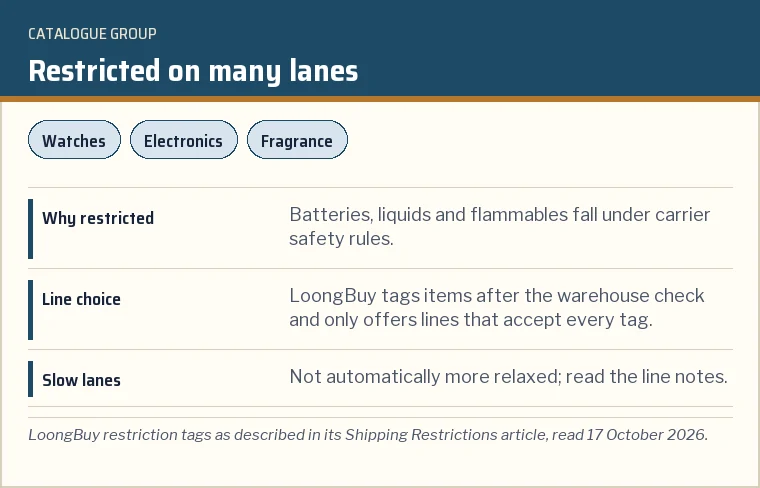
Restricted on many lanes
Batteries, liquids and anything flammable cut the list of lines that will accept a parcel. Watches with batteries, earbuds and other electronics, and fragrance usually need a line whose notes say it takes them, and the slow lanes are not automatically more relaxed about it.
- WatchesQuartz watches carry a battery; check the line notes.
- ElectronicsBuilt-in lithium batteries limit the lines.
- FragranceLiquid and flammable; few lines accept it.